Saadio

Fascinated by the work of the numerous billboard painters who lived in his busy Dakar neighborhood, Saadio was drawn to painting at a young age. He quit school in his teenage years to work a variety of jobs including tile layer, house painter, shoemaker, trash collector and waiter until, by a twist of fate, he was hired as a telephone operator in a company located across from the studio of famous artist Kalidou Kassé, also known as le Pinceau du Sahel (“the paintbrush of the Sahel”). Saadio started training there before joining the studio of Kre Mbaye on the island of N’gor. In 2006, after 15 years of artistic practice, he had an epiphanic encounter with Jean-Michel Basquiat that revolutionized his approach: he suddenly noticed the vivid graffiti all around him and embraced it, transforming his art.
Saadio’s inspiration comes from the graffiti which cover the walls of Dakar as well as from current events. His paintings burst with life. Subjects out of scale, as if etched on a wall surface, popping colors, and mysterious signs cover the canvas, leaving it to the viewer’s imagination to fill in the narrative. The negative space is filled with sketched symbols and lines. These both add context and impart vibrancy to the painting. The symbols are inspired by Dogon and Fulani ideograms, as well as by the designs found on bogolan (the handmade Malian cotton fabric traditionally dyed with fermented mud). They represent a codified language that is only understood by the initiates. Saadio remembers seeing his mother paint them on the walls of their house when he was young.
Saadio’s paintings hang in the Musée Boribana iSenegal), and the Museo de Bellas Artes of Murcia (Spain). In 2015, with Barkinado Bocoum, he painted Senegal’s largest mural.
Contact the artist: saadio@outlook.com
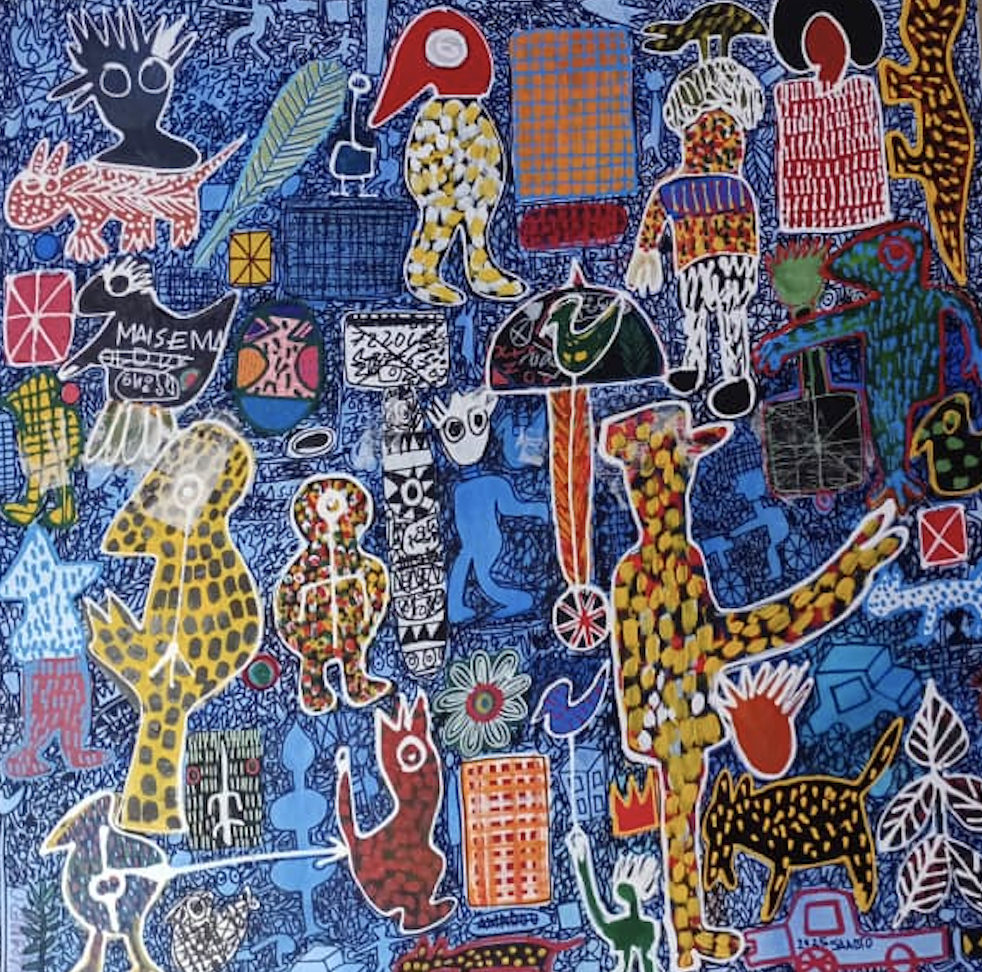
Featured Projects
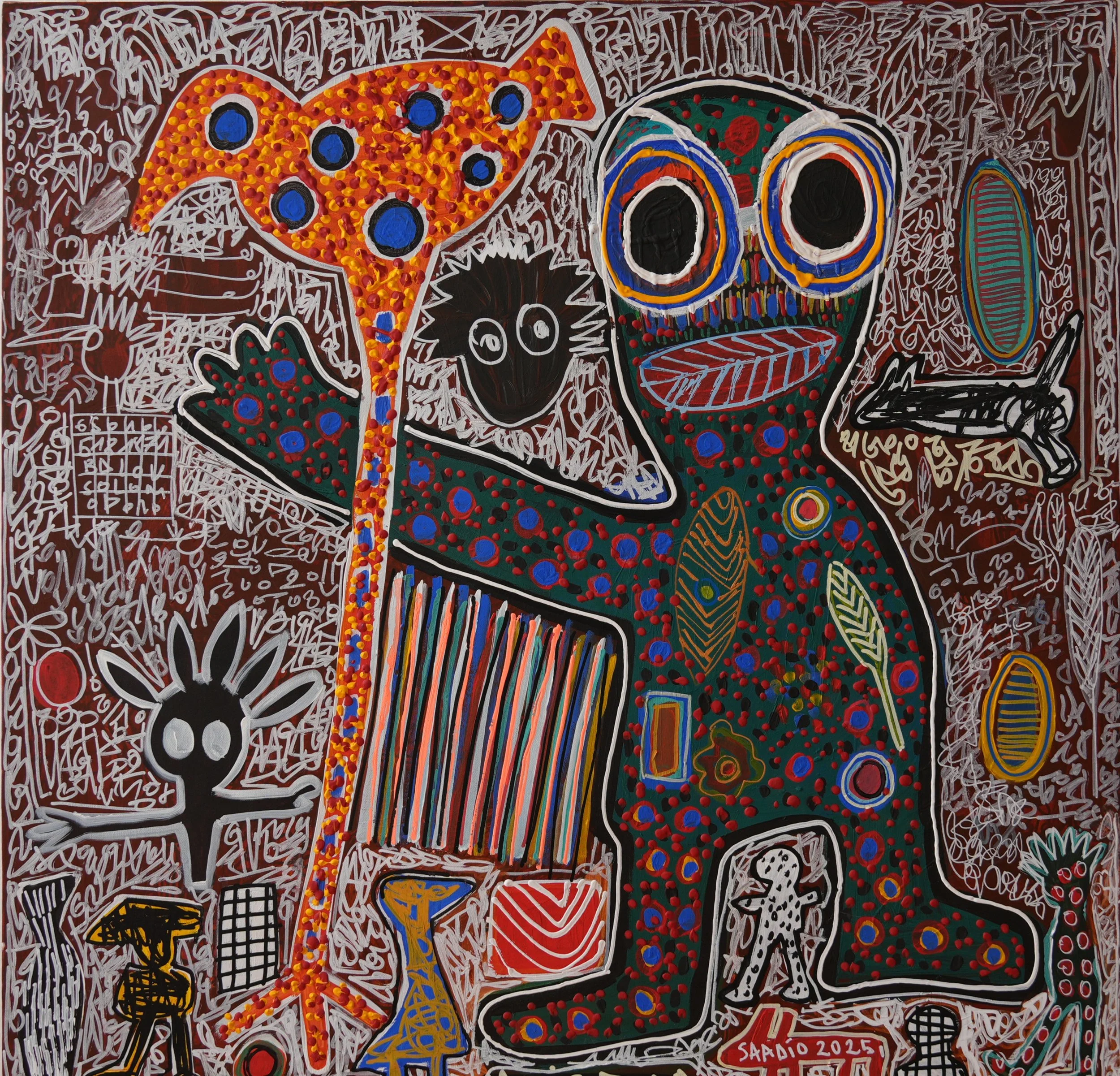
1.250.000XOF
Ailleurs
Mixed technique, acrylic on canvas and posca
1m x 1m
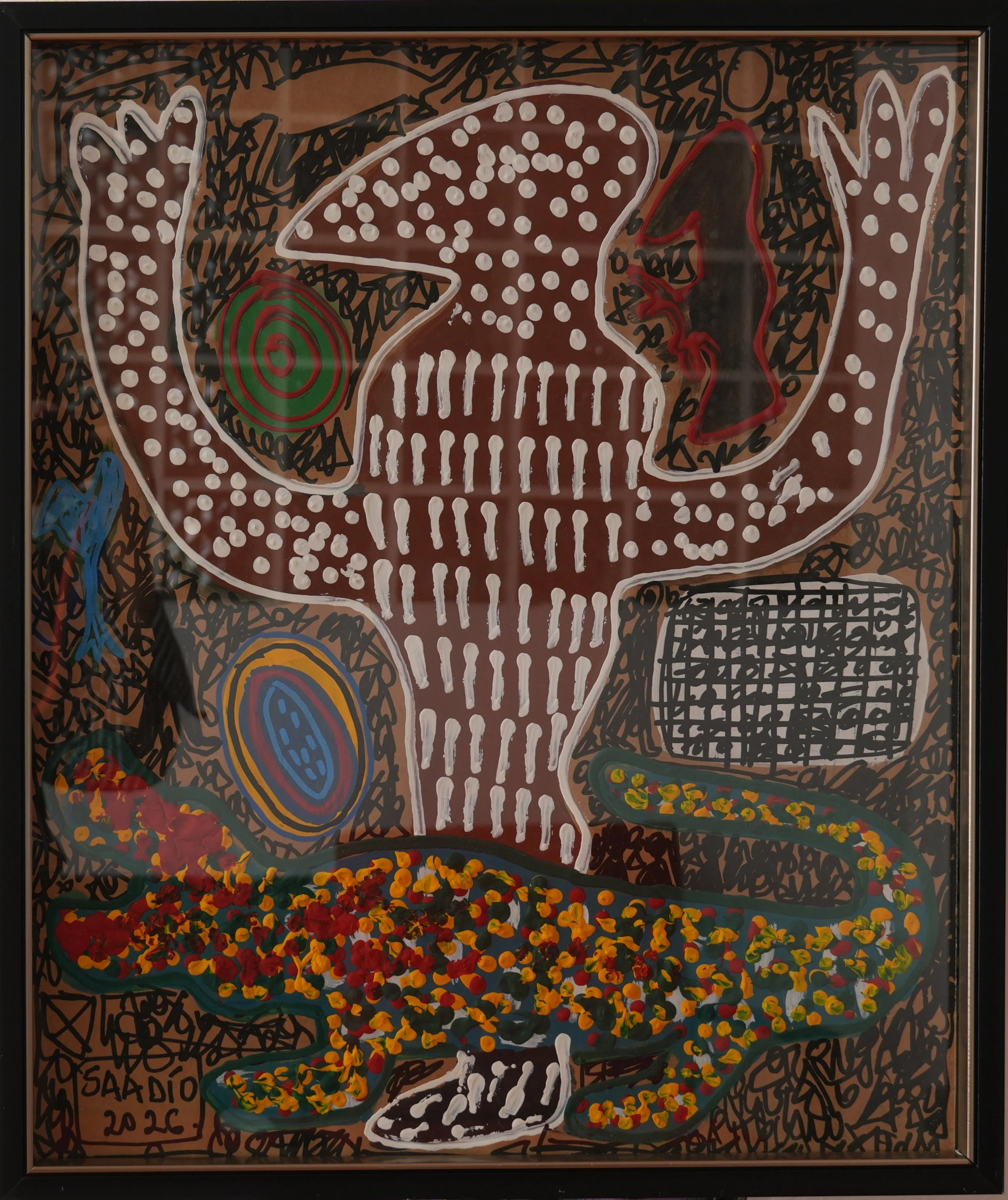
500.000XOF
Signe De Bravoure
Mixed technique, acrylic on canvas and posca
60cm x 50cm
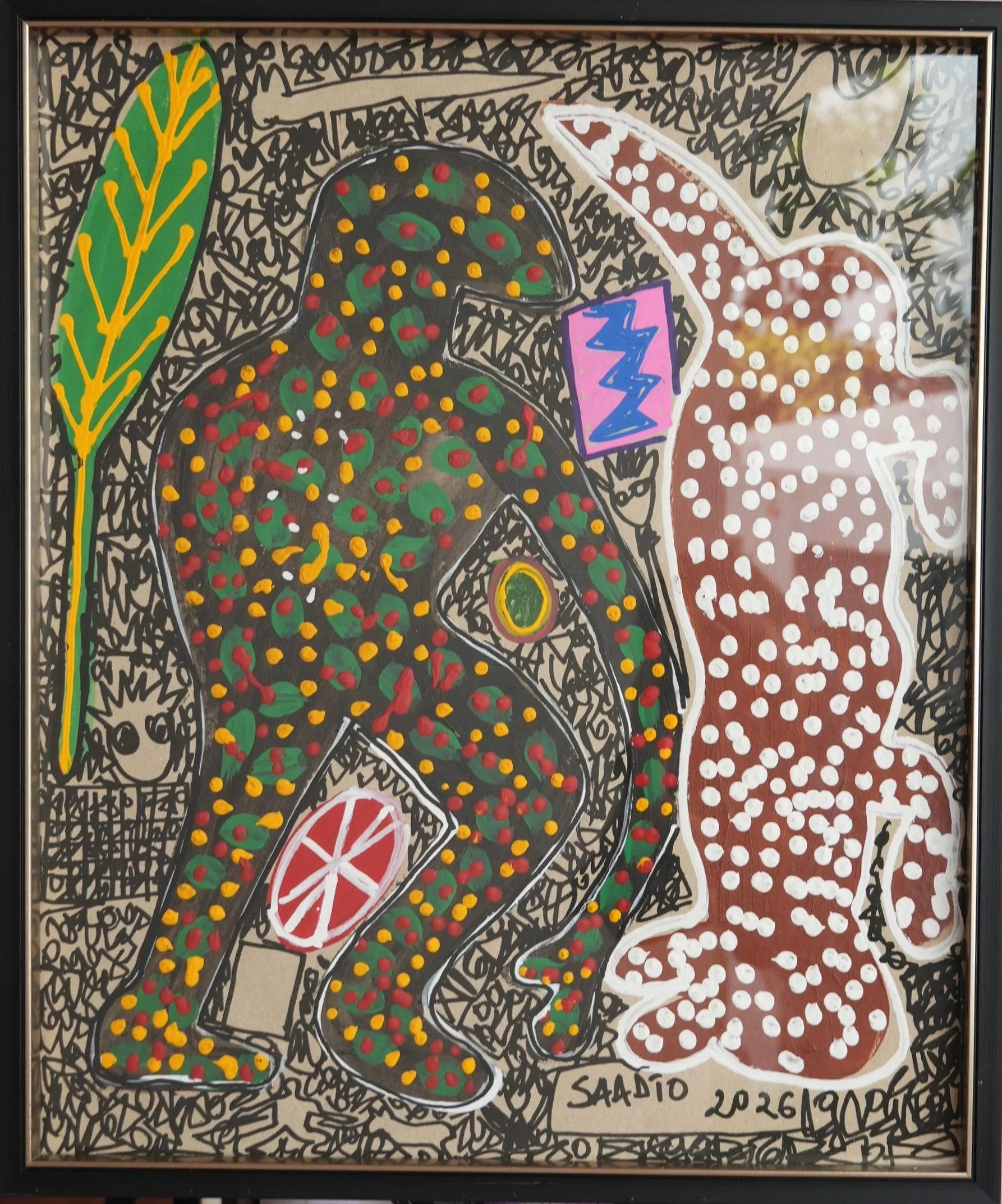
500.000XOF
Défi
Mixed technique, acrylic on canvas and posca
60cm x 50cm